Sustainability education is becoming increasingly important as we face global challenges like climate change and environmental degradation. By teaching future generations about sustainable practices, we can equip them with the knowledge and skills they need to create a better world. This article explores how sustainability education shapes young leaders, integrates technology, and prepares students for a sustainable future.
Key Takeaways
- Sustainability education empowers students to become proactive change-makers in their communities.
- Integrating technology enhances learning through interactive tools and real-world simulations.
- Understanding environmental impact is crucial for adopting sustainable practices.
- Interdisciplinary learning fosters collaboration and a comprehensive view of sustainability.
- Assessing the effectiveness of sustainability education helps refine teaching methods and improve student engagement.
The Role of Sustainability Education in Shaping Future Leaders
Sustainability education is more than just learning facts; it’s about shaping the next generation of leaders who can tackle complex global challenges. It’s about giving students the tools they need to make informed decisions and drive positive change. I think it’s really important to focus on how we can help students become active participants in creating a more sustainable world.
Empowering Students to Take Action
Sustainability education empowers students to become active agents of change. It’s not enough to just learn about the problems; students need to feel like they can actually do something about them. This involves providing them with opportunities to participate in real-world projects, develop solutions, and advocate for change. For example, students could start a school garden or organize a community cleanup. It’s all about turning knowledge into action.
- Organizing campaigns to reduce waste.
- Developing innovative solutions for local environmental problems.
- Advocating for sustainable policies at the school or community level.
Fostering Global Citizenship
Sustainability is a global issue, and education needs to reflect that. We need to help students understand the interconnectedness of our world and the impact that their actions have on people and ecosystems far away. This means fostering a sense of global citizenship and encouraging students to think critically about issues like climate change, poverty, and inequality. It’s about understanding that we’re all in this together.
Sustainability education should encourage students to see themselves as part of a global community and to take responsibility for the well-being of the planet and its people. It’s about developing a sense of empathy and understanding for different cultures and perspectives.
Building Critical Thinking Skills
Sustainability challenges are complex and multifaceted, and there are no easy answers. That’s why it’s so important to build critical thinking skills in students. They need to be able to analyze information, evaluate different perspectives, and develop their own solutions. This involves teaching them how to ask questions, challenge assumptions, and think creatively. It’s about preparing them to be problem-solvers and innovators.
Here’s a simple table showing how critical thinking can be applied to sustainability issues:
| Skill | Application to Sustainability |
|---|---|
| Analysis | Examining the environmental impact of different products. |
| Evaluation | Assessing the effectiveness of different sustainability initiatives. |
| Problem-solving | Developing solutions to reduce carbon emissions. |
Integrating Technology in Sustainability Education
Technology is changing how we learn, and sustainability education is no exception. It’s not just about using computers in the classroom; it’s about using tech to understand and solve environmental problems. I remember when I first saw a virtual model of a forest ecosystem – it was way more engaging than reading about it in a textbook. It made me think about how I could use technology to make a difference.
Utilizing Virtual Simulations
Virtual simulations are a game-changer. They let students explore complex systems like climate change or deforestation in a safe, interactive environment. Instead of just hearing about the effects of pollution, students can see it happen in real-time and experiment with different solutions. It’s like having a lab where you can test out ideas without real-world consequences. These simulations can really help students grasp the scale and urgency of environmental issues. For example, a simulation could show the impact of different energy policies on carbon emissions over several decades. This hands-on approach makes learning more memorable and impactful. It’s not just about memorizing facts; it’s about understanding how things work and what we can do to make them better. This is a great way to achieve goal of Education for Sustainable Development.
Engaging with Interactive Platforms
Interactive platforms are another way to bring sustainability education to life. Think online games, interactive maps, and collaborative projects. These platforms let students work together, share ideas, and learn from each other. I’ve seen students use online mapping tools to track pollution levels in their communities and then create presentations to share their findings with local officials. It’s all about making learning active and relevant. Plus, these platforms often include features like quizzes, polls, and discussion forums, which keep students engaged and motivated. It’s a far cry from sitting in a lecture hall and passively taking notes. The key is to find platforms that are user-friendly and aligned with the curriculum. This helps students develop critical thinking skills.
Promoting Innovative Solutions
Technology can also help students come up with new solutions to environmental problems. From designing apps that track carbon footprints to developing new materials that are more sustainable, the possibilities are endless. I know a group of students who created a website that connects local farmers with consumers, reducing the need for long-distance transportation of food. It’s inspiring to see young people using their tech skills to make a real difference. The best part is that these projects often involve collaboration with experts in different fields, giving students valuable experience working on interdisciplinary teams. It’s not just about learning about sustainability; it’s about becoming innovators and problem-solvers. This is how we prepare the sustainable workforce of the future.
Technology is not a magic bullet, but it can be a powerful tool for sustainability education. By using virtual simulations, interactive platforms, and other tech-based resources, we can make learning more engaging, relevant, and effective. The key is to use technology in a way that complements traditional teaching methods and empowers students to take action.
Understanding Environmental Sustainability
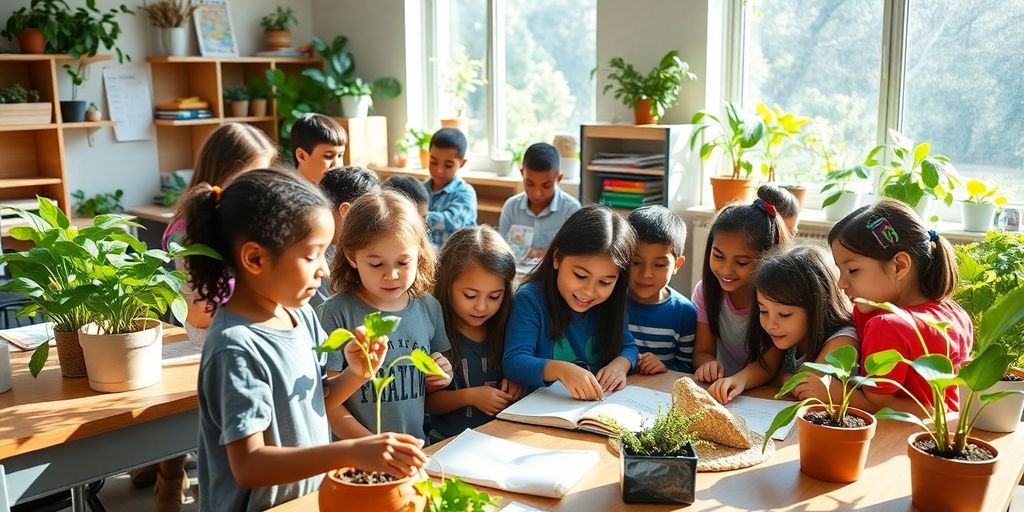
Environmental sustainability is all about keeping our planet healthy while we still do the things we need to do. It’s about making sure we don’t use up all the resources or mess things up so badly that future generations can’t live comfortably. It’s a big deal, and understanding it is the first step to making a difference. It’s not just about recycling; it’s about rethinking how we live.
Defining Environmental Impact
Environmental impact is basically how much our actions affect the environment. This can be anything from driving a car to building a factory. It’s important to understand what causes the most harm so we can try to reduce it. We need to consider things like pollution, deforestation, and the depletion of natural resources. Understanding environmental sustainability is key to minimizing these impacts.
Exploring Sustainable Practices
Sustainable practices are ways of doing things that don’t harm the environment. There are tons of them, and they’re not always complicated. Here are a few examples:
- Using renewable energy sources like solar and wind.
- Reducing waste by recycling and composting.
- Conserving water by using less and fixing leaks.
- Supporting businesses that prioritize sustainability.
It’s easy to feel overwhelmed by the scale of environmental problems, but every little bit helps. Even small changes in our daily lives can add up to a big impact over time. The goal is to find ways to live that are both good for us and good for the planet.
Case Studies in Environmental Education
Looking at real-world examples can help us understand how sustainability works in practice. For example, some schools are now incorporating flexible assessment tools to measure the impact of their sustainability programs. Here’s a quick look at a few cases:
- Costa Rica: This country has made huge strides in renewable energy, with a large percentage of its electricity coming from sources like hydropower and geothermal. They’ve also invested heavily in protecting their rainforests.
- Curitiba, Brazil: This city is known for its innovative public transportation system and its focus on green spaces. They’ve created a network of parks and bike paths, making it easier for people to get around without cars.
- Vauban, Germany: This neighborhood is designed to be car-free, with residents relying on walking, biking, and public transportation. The buildings are energy-efficient, and there’s a strong emphasis on community and sustainability.
Interdisciplinary Approaches to Sustainability Education
Sustainability isn’t just about science; it touches everything. That’s why bringing different subjects together is so important. It’s about seeing how things connect, not just learning in separate boxes. It’s like, you can’t understand climate change without also understanding economics and social justice, right?
Connecting Subjects for Holistic Learning
Think about it: math can help us understand energy consumption, history can show us past environmental mistakes, and art can inspire us to protect nature. When we link these subjects, students get a much better picture of how sustainability works in the real world. It’s not just a science problem; it’s a human problem that needs all sorts of skills to solve. For example, you can use history to understand the evolution of sustainable development practices.
Real-World Applications of Sustainability
It’s one thing to learn about sustainability in a classroom, but it’s another to see it in action. Field trips to local farms, renewable energy plants, or recycling centers can make a huge difference. Students can see how businesses are using sustainable practices, how communities are dealing with environmental challenges, and how they can get involved.
- Visiting a local organic farm to learn about sustainable agriculture.
- Touring a waste management facility to understand recycling processes.
- Analyzing the energy efficiency of a local building.
Encouraging Collaborative Projects
Group projects are awesome for sustainability education. Students can work together to come up with solutions to real-world problems. Maybe they design a community garden, create a campaign to reduce waste at their school, or develop a plan for a more sustainable transportation system. Working together teaches them teamwork, problem-solving, and how to make a difference.
Sustainability projects are a great way to get students involved in their communities. It’s not just about learning; it’s about doing. When students see that their actions can make a real impact, they’re more likely to become lifelong advocates for sustainability.
Here’s an example of how different subjects can come together in a sustainability project:
| Subject | Application |
|---|---|
| Science | Analyzing the environmental impact of different materials. |
| Math | Calculating the carbon footprint of a project. |
| Social Studies | Researching the social and economic effects of sustainability initiatives. |
| English | Writing persuasive arguments for sustainable practices. |
Assessing the Effectiveness of Sustainability Education
It’s one thing to teach about sustainability, but how do we know if it’s actually making a difference? Are students really grasping the concepts, and more importantly, are they changing their behavior? Figuring out how to measure the impact of sustainability education is a challenge, but it’s super important for improving programs and making sure they’re effective. We need to know what’s working and what’s not.
Measuring Student Engagement
One way to gauge effectiveness is by looking at student engagement. Are students actively participating in discussions, projects, and activities related to sustainability? Are they showing a genuine interest in the topic? We can track engagement through:
- Attendance and participation rates in sustainability-related events.
- The number of students who volunteer for environmental initiatives.
- The quality of student work on sustainability projects.
It’s also important to consider the depth of their engagement. Are they just going through the motions, or are they really thinking critically about the issues? Surveys and focus groups can help us understand their level of understanding and commitment.
Feedback Mechanisms for Improvement
Getting feedback from students is crucial for improving sustainability education programs. What do they find helpful? What do they think is missing? What could be done better? Some ways to gather feedback include:
- Anonymous surveys after each unit or project.
- Regular class discussions where students can share their thoughts and ideas.
- Student advisory boards that provide input on curriculum development.
This feedback can then be used to refine teaching methods, update course content, and make the learning experience more relevant and engaging. It’s also important to get feedback from teachers and administrators to get a holistic understanding of the program’s strengths and weaknesses.
Developing Standardized Assessment Tools
While student engagement and feedback are important, it’s also helpful to have some standardized assessment tools to measure student learning. This could include:
- Pre- and post-tests to assess changes in knowledge and attitudes.
- Rubrics for evaluating student projects and presentations.
- Case studies that require students to apply their knowledge to real-world problems.
These tools can help us track student progress over time and compare the effectiveness of different teaching methods. Standardized assessments can also help to ensure that all students are meeting certain learning objectives related to sustainability. Initiatives like the STARS program can help with this.
| Assessment Type | Focus | Benefits |
|---|---|---|
| Pre/Post Tests | Knowledge and attitude changes | Quantifiable data, easy to compare results |
| Project Rubrics | Application of knowledge and skills | Clear expectations, consistent grading |
| Case Studies | Problem-solving and critical thinking | Real-world application, demonstrates understanding of complex issues, helps with sustainable development |
Challenges in Implementing Sustainability Education
Okay, so you want to get sustainability education going? Awesome! But let’s be real, it’s not all sunshine and solar panels. There are some serious roadblocks we need to talk about. It’s not always easy getting everyone on board, and sometimes, the system itself seems to be working against you.
Curriculum Integration Issues
Trying to squeeze sustainability into an already packed curriculum can feel like trying to fit a square peg in a round hole. Teachers are often under pressure to cover specific topics for standardized tests, and sustainability can seem like an extra burden. It’s hard to make it feel like a natural part of what’s already being taught. Plus, sometimes the existing curriculum is just, well, outdated and doesn’t really connect with the real-world problems that sustainability education is trying to address. Finding the right flexible assessment tools is key.
Resource Allocation and Funding
Let’s talk money. Or, more accurately, the lack of it. Sustainability programs often get stuck at the bottom of the funding pile. Schools are already struggling to pay for basic supplies, so things like teacher training in sustainability, new educational materials, or even just making the school building more energy-efficient? Those can feel like luxuries. And it’s not just about money; it’s about time too. Teachers need time to develop new lesson plans and learn about sustainability themselves, and that time is often hard to come by.
Overcoming Institutional Resistance
Sometimes, the biggest challenge isn’t the curriculum or the money, it’s the people. Getting everyone on board – from administrators to teachers to even some parents – can be a real uphill battle. Some people might see sustainability as a fad, or they might not understand why it’s important. Others might be resistant to change in general. You need to have visionary leadership to overcome this resistance. It’s about showing them that sustainability isn’t just about saving the planet; it’s about preparing students for the future and making the school a better place. It’s about showing how environmental education can benefit everyone.
The Future of Sustainability Education
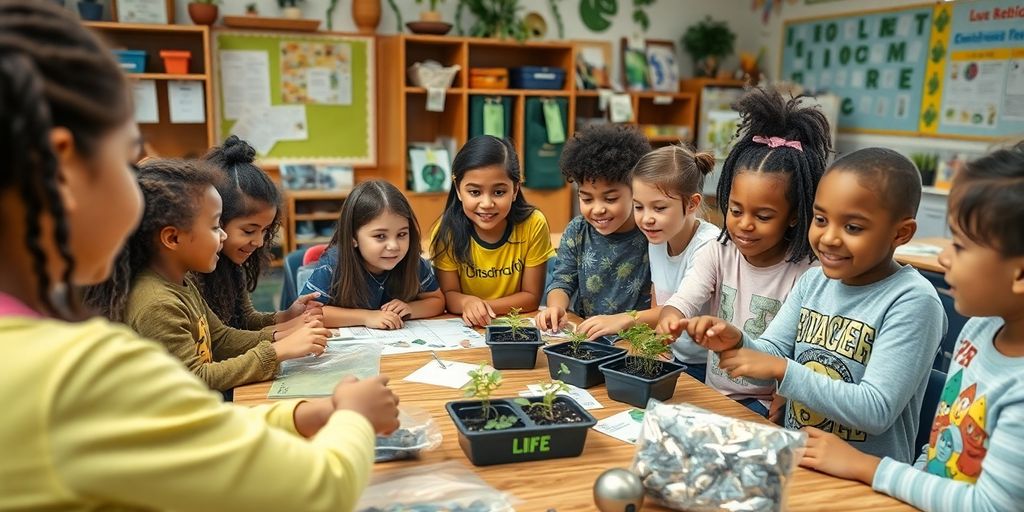
Sustainability education is not just a trend; it’s becoming a core part of how we prepare future generations. It’s about more than just recycling; it’s about changing how we think and act in the world. I think it’s really cool how it’s evolving.
Emerging Trends and Innovations
Sustainability education is constantly changing, with new ideas and technologies popping up all the time. One big trend is using technology to make learning more engaging and interactive. Think virtual reality field trips to see the effects of climate change firsthand, or online games that teach about resource management. It’s also about connecting students with real-world projects, like designing sustainable solutions for their communities. Here are some trends:
- Gamification of learning
- Personalized learning paths
- Emphasis on data literacy
Global Collaboration in Education
Sustainability is a global issue, so it makes sense that education about it should be too. Schools and universities are starting to partner with institutions in other countries to share ideas and best practices. This can involve student exchange programs, joint research projects, or even just online collaborations. It’s all about learning from each other and working together to solve problems. Imagine a classroom of students learning about the rainforest and its destruction, global impacts, protection and resource management.
Preparing for a Sustainable Workforce
As the world shifts towards a more sustainable economy, there’s a growing demand for workers with the skills and knowledge to support that transition. Sustainability education is playing a key role in preparing students for these jobs. This means teaching them about things like renewable energy, green building, and sustainable agriculture. But it’s also about developing skills like critical thinking, problem-solving, and collaboration, which are essential for any job in the 21st century. Developing flexible assessment tools would provide educators and policy-makers with the data needed to enhance the efficacy of ESD and justify its expansion.
Sustainability education is not just about learning facts; it’s about developing a mindset. It’s about teaching students to think critically about the world around them and to take action to create a more sustainable future. It’s about empowering them to be leaders and change-makers.
Wrapping It Up: The Future of Sustainability Education
In the end, sustainability education is more than just a trend; it’s a necessity. It shapes how young people think about the world and their role in it. By teaching them about the environment, social issues, and economic factors, we’re giving them the tools to tackle the big challenges ahead. It’s about making connections and understanding that everything is linked. Schools can be places where students not only learn but also take action, whether through projects or community involvement. This hands-on experience is what really sticks with them. As we look to the future, it’s clear that integrating sustainability into education is key to raising a generation that cares about the planet and each other. Let’s keep pushing for these changes, because the future depends on it.
Frequently Asked Questions
What is sustainability education?
Sustainability education teaches students about how to care for the environment and make choices that help protect our planet for future generations.
Why is sustainability education important?
It’s important because it helps students understand the impact of their actions on the environment and encourages them to become responsible citizens.
How can technology be used in sustainability education?
Technology can be used through virtual simulations and interactive apps that show how human activities affect the environment, making learning more engaging.
What are some challenges in teaching sustainability?
Some challenges include fitting sustainability into existing curriculums, finding enough resources, and getting support from schools.
How can we measure the success of sustainability education?
We can measure success by looking at student engagement, feedback from students, and using assessment tools to see how much they learn.
What is the future of sustainability education?
The future includes new trends like global collaboration in learning and preparing students for jobs that focus on sustainability.